
Haglund's Deformities
Written by Richard R. Moy, DPM, FACFAS, Podiatric Foot & Ankle Surgeon, bunion surgery experience since 1992.
Last medically reviewed: August 7, 2026
What is a Haglund's Deformity?
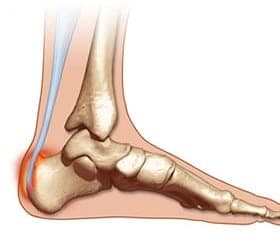
A heel with Haglund's Deformities.
This deformity occurs on the back of the heel where a large bone growth protrudes outward, causing pain with most types of shoes, especially ones with a rigid back like dress shoes or skates. The irritation from the bump rubbing against footwear can also inflame the Achilles tendon and the bursa that sits between the tendon and the bone.
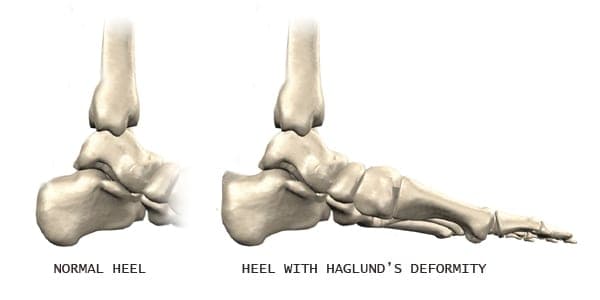
A comparison between a normal heel and one with Haglund's Deformities.
Diagnosis
Dr. Moy diagnoses a Haglund's deformity through a physical exam of the heel and an X-ray, which shows the size and shape of the bony prominence. The exam also checks the condition of the adjacent Achilles tendon, since chronic irritation can affect surgical planning.
Treatment Options
Conservative care, such as heel lifts, open-back shoes, padding, and anti-inflammatory treatment, is tried first. When symptoms persist, surgical repair of this area involves removing the large bone growth and repairing the affected portion of the Achilles tendon. Consequently, most patients are non-weight bearing with a cast and crutches for about 6 weeks.
When to See a Surgeon
If heel pain and swelling persist despite shoe changes and conservative treatment, or the bump is significantly limiting your footwear options, a surgical evaluation is the next step.
Have questions about your own feet?
Request a consultation with Dr. Moy to discuss your options.
This website provides general educational information and reflects Dr. Moy's clinical experience and professional opinions. It is not a substitute for an individual medical examination, diagnosis, treatment plan, or emergency care.
Every patient's anatomy, health, bone quality, procedure, healing response, and recovery are different. Recovery milestones and outcomes described on this website are typical or reported experiences and are not guarantees.
Patients should follow their own written postoperative instructions and contact the office promptly with unusual symptoms. Sudden chest pain, difficulty breathing, fainting, or another emergency requires immediate emergency medical care.