
Foreign Bodies
Written by Richard R. Moy, DPM, FACFAS, Podiatric Foot & Ankle Surgeon, bunion surgery experience since 1992.
Last medically reviewed: August 6, 2026
What are Foreign Bodies?
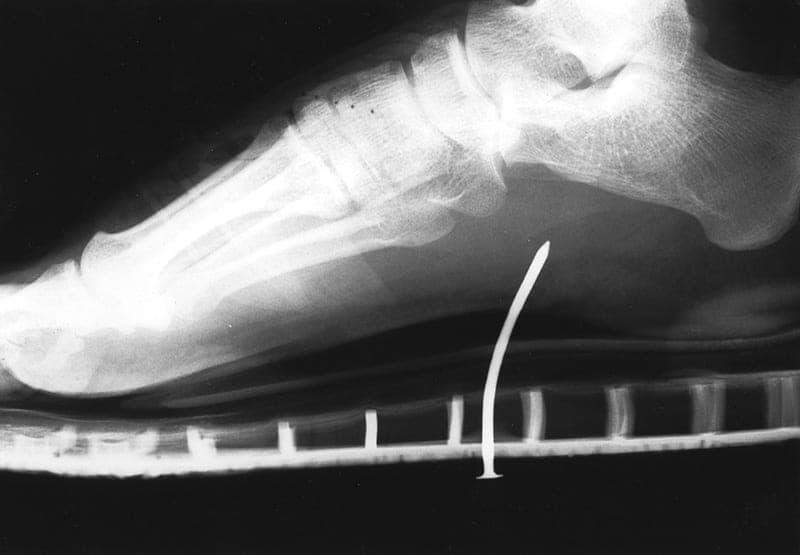
A nail lodged in a foot.
Foreign bodies consist of a variety of different substances such as wood, hair, guitar strings, metal, glass, and living tissue such as sea urchin spines, sea anemone stingers, or bee stingers. A foreign body can go unnoticed for some time if it's small or embedded deep in the tissue, sometimes surfacing later as unexplained pain, swelling, or drainage.
Diagnosis
Certain diagnostic tests are performed depending on the type of material suspected. Some materials, such as metal and glass, show clearly on X-ray, while others, such as wood, thorns, or spines, may require ultrasound or other imaging to locate. Dr. Moy also examines the entry point and surrounding tissue for signs of infection or reaction to the material.
Treatment Options
Foreign bodies are typically extremely difficult to remove. It takes exceptional skill to locate and isolate them and remove them in total without destroying surrounding anatomical tissue. Leaving fragments behind can lead to chronic inflammation, infection, or a draining sinus tract, so complete removal, not just symptom relief, is the goal.
When to See a Surgeon
If you suspect a foreign body is still in your foot, especially if the area is painful, swollen, draining, or not healing as expected, it should be evaluated rather than left to work itself out on its own.
Have questions about your own feet?
Request a consultation with Dr. Moy to discuss your options.
This website provides general educational information and reflects Dr. Moy's clinical experience and professional opinions. It is not a substitute for an individual medical examination, diagnosis, treatment plan, or emergency care.
Every patient's anatomy, health, bone quality, procedure, healing response, and recovery are different. Recovery milestones and outcomes described on this website are typical or reported experiences and are not guarantees.
Patients should follow their own written postoperative instructions and contact the office promptly with unusual symptoms. Sudden chest pain, difficulty breathing, fainting, or another emergency requires immediate emergency medical care.