
What is a Bone Spur?
Written by Richard R. Moy, DPM, FACFAS, Podiatric Foot & Ankle Surgeon, bunion surgery experience since 1992.
Last medically reviewed: August 8, 2026
What is a Bone Spur?
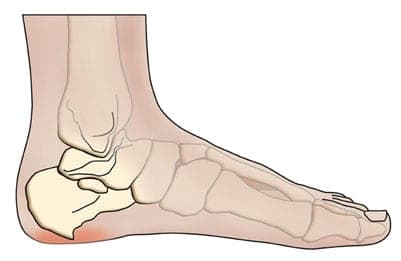
An image of an extending bone spur in the heel.
A bone spur, or osteophyte, is an extra bit of bone that forms along the edge of a joint, often where cartilage has worn down or where a tendon or ligament repeatedly pulls on the bone. In the foot, spurs commonly develop on the heel, the top of the midfoot, or around the big toe joint. They can cause pain, restrict motion, or press against nerves and soft tissue, but a spur that isn't causing symptoms doesn't necessarily need to be treated.
Diagnosis
Bone spurs are diagnosed with a physical exam and confirmed with an X-ray, which shows the size and location of the growth. Dr. Moy also evaluates where the spur sits relative to the joint to determine whether it's contributing to your symptoms or is an incidental finding.
Treatment Options
Conservative care, such as shoe modification, padding, orthotics, and anti-inflammatory treatment, is tried first for many spurs. When surgery is needed, a large majority of bone spurs can be treated with minimal incision surgery. Consequently, the healing time is extremely short and the patient can walk immediately afterward.
There are a couple of exceptions, such as surgically treated heel spurs on the bottom of the heel or on the back of the heel, which may require a slightly more involved approach and a longer recovery.
When to See a Surgeon
Consider a surgical consultation if a bone spur continues to cause pain after conservative treatment, limits your range of motion, or makes it difficult to wear normal shoes.
Have questions about your own feet?
Request a consultation with Dr. Moy to discuss your options.
This website provides general educational information and reflects Dr. Moy's clinical experience and professional opinions. It is not a substitute for an individual medical examination, diagnosis, treatment plan, or emergency care.
Every patient's anatomy, health, bone quality, procedure, healing response, and recovery are different. Recovery milestones and outcomes described on this website are typical or reported experiences and are not guarantees.
Patients should follow their own written postoperative instructions and contact the office promptly with unusual symptoms. Sudden chest pain, difficulty breathing, fainting, or another emergency requires immediate emergency medical care.