
Soft Tissue Issues
Written by Richard R. Moy, DPM, FACFAS, Podiatric Foot & Ankle Surgeon, bunion surgery experience since 1992.
Last medically reviewed: August 9, 2026
Do I Have a Soft Tissue Issue?
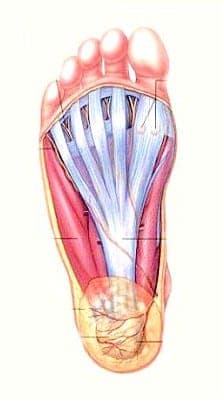
An illustration of a foot's underlying soft tissue.
Soft tissue issues may include masses and cysts that develop in the tendons, ligaments, fat pads, or other tissue surrounding the bones of the foot. They often present as a firm or fluid-filled lump that may or may not be painful, and can grow slowly over time. The vast majority of tumors in the foot are benign.
Diagnosis
A physical exam is usually the first step, and imaging such as ultrasound or MRI may be used to characterize the mass and confirm its location before any procedure is planned. Attention to a mass's location and source is key to preventing these growths from recurring after treatment.
Treatment Options
Not every soft tissue mass requires removal. Ones that are painless and stable can often be monitored. When a mass causes pain, restricts movement, or continues to grow, surgical excision is the standard treatment. Precise dissection of the soft tissue, isolating the affected tissue from the surrounding structures, is important for the successful removal of the mass and healing of the surrounding area.
When to See a Surgeon
If you notice a new lump on your foot that is growing, painful, or interfering with normal activity, it should be evaluated to confirm what it is and whether removal is appropriate.
Have questions about your own feet?
Request a consultation with Dr. Moy to discuss your options.
This website provides general educational information and reflects Dr. Moy's clinical experience and professional opinions. It is not a substitute for an individual medical examination, diagnosis, treatment plan, or emergency care.
Every patient's anatomy, health, bone quality, procedure, healing response, and recovery are different. Recovery milestones and outcomes described on this website are typical or reported experiences and are not guarantees.
Patients should follow their own written postoperative instructions and contact the office promptly with unusual symptoms. Sudden chest pain, difficulty breathing, fainting, or another emergency requires immediate emergency medical care.