
Flat Feet
Written by Richard R. Moy, DPM, FACFAS, Podiatric Foot & Ankle Surgeon, bunion surgery experience since 1992.
Last medically reviewed: August 5, 2026
What are Flat Feet?
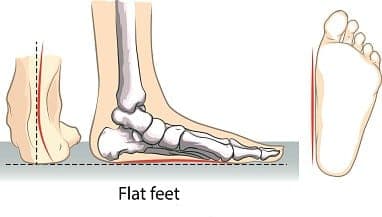
A flat foot.
A flat foot occurs when the arch collapses toward the ground, either because it never fully developed (common and often flexible in children) or because it flattens over time in adulthood due to tendon weakness, injury, or joint changes. Flat feet can be painless, or they can lead to arch or ankle pain, fatigue with standing or walking, and uneven shoe wear.
Diagnosis
Dr. Moy evaluates the foot's alignment while standing and walking, along with the range of motion of the lower extremity, to determine whether the flat foot is flexible or rigid and whether it's contributing to symptoms. This assessment is important for confirming the patient is a good candidate for a given procedure.
Treatment Options
Flat feet in children is commonly treated with a subtalar joint arthroereisis implant. The procedure is very non-invasive and takes just about 15 minutes or less to complete. It is tolerated well in the vast majority of patients. A 2021 study in Children comparing three implant types found that all produced meaningful, comparable clinical and radiographic improvement, with implant selection mattering less than precise surgical positioning.
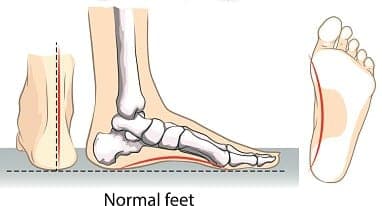
A normal foot.
Other procedures to correct a flat foot in adults are numerous and require a number of more complicated procedures, such as tendon repair or bone realignment. These typically require a significant amount of non-weight-bearing activity after surgery.
When to See a Surgeon
If flat feet are causing persistent pain, fatigue, or difficulty with normal activity, or if a child's flat feet aren't improving with growth, an evaluation can determine whether treatment is worth pursuing.
Have questions about your own feet?
Request a consultation with Dr. Moy to discuss your options.
This website provides general educational information and reflects Dr. Moy's clinical experience and professional opinions. It is not a substitute for an individual medical examination, diagnosis, treatment plan, or emergency care.
Every patient's anatomy, health, bone quality, procedure, healing response, and recovery are different. Recovery milestones and outcomes described on this website are typical or reported experiences and are not guarantees.
Patients should follow their own written postoperative instructions and contact the office promptly with unusual symptoms. Sudden chest pain, difficulty breathing, fainting, or another emergency requires immediate emergency medical care.