
Bunion
Written by Richard R. Moy, DPM, FACFAS, Podiatric Foot & Ankle Surgeon, bunion surgery experience since 1992.
Last medically reviewed: August 13, 2026
What Is a Bunion?
The visible bump is only the outward sign of a three-dimensional deformity involving the entire great-toe joint.
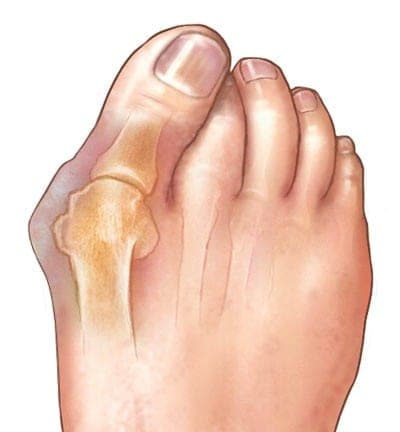
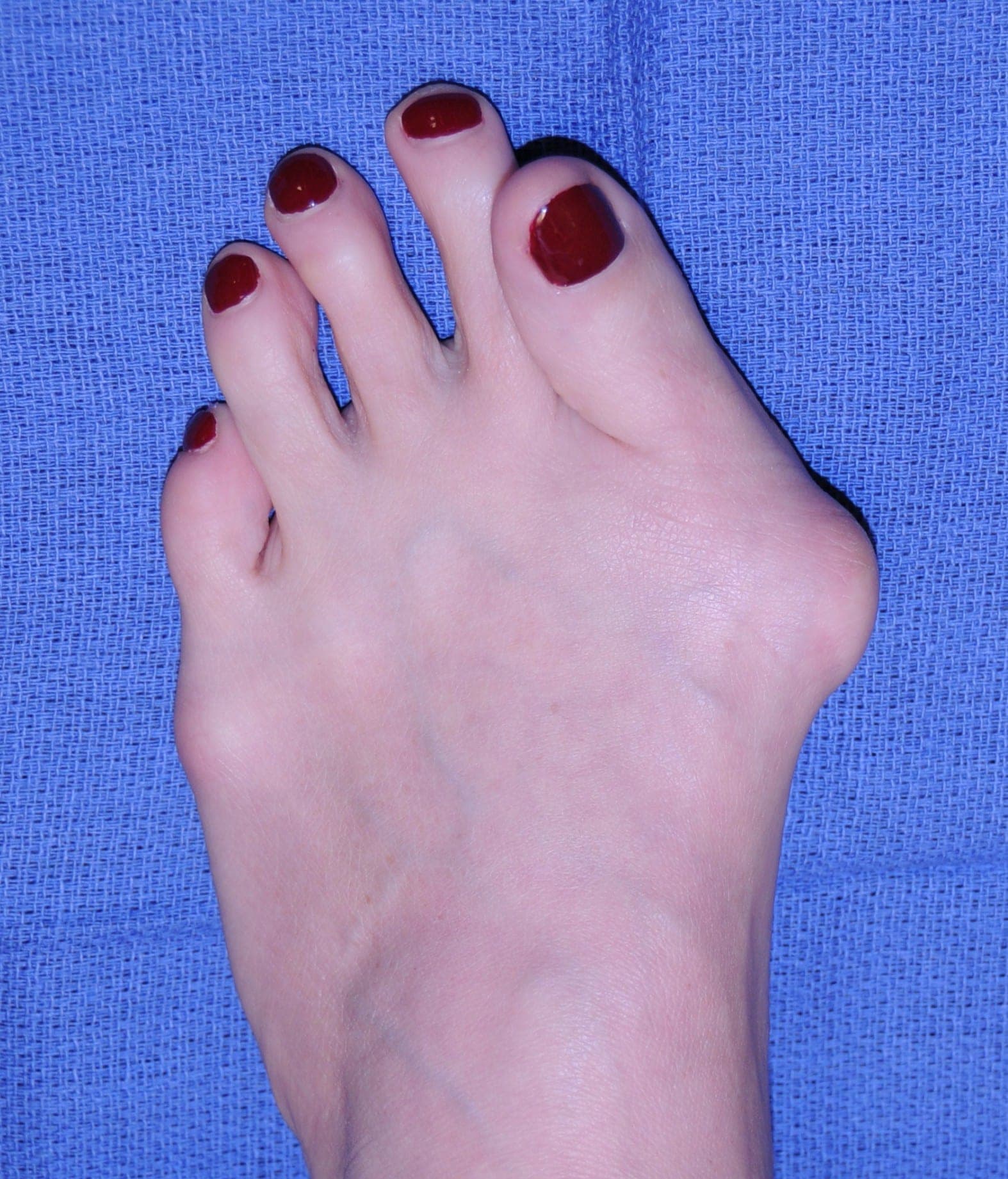
A bunion in the big toe.
A bunion is commonly described as a bump on the inner side of the foot near the great toe. That description is incomplete. The bump is only a small part of the bunion. The prominence develops as the first metatarsal and great toe gradually lose their normal relationship.
The first metatarsal moves away from the second metatarsal while the great toe drifts toward the second toe. The sesamoid bones beneath the metatarsal head may become progressively displaced relative to the joint, and the capsule, ligaments, and tendons that cross the joint begin pulling along abnormal lines of force.
The bump is therefore not simply extra bone growing for no reason, or a piece of bone that needs to be shaved away. It is the visible sign of a mechanical imbalance across the entire great-toe joint.
| Mild | Moderate | Severe | Extremely Severe |
|---|---|---|---|
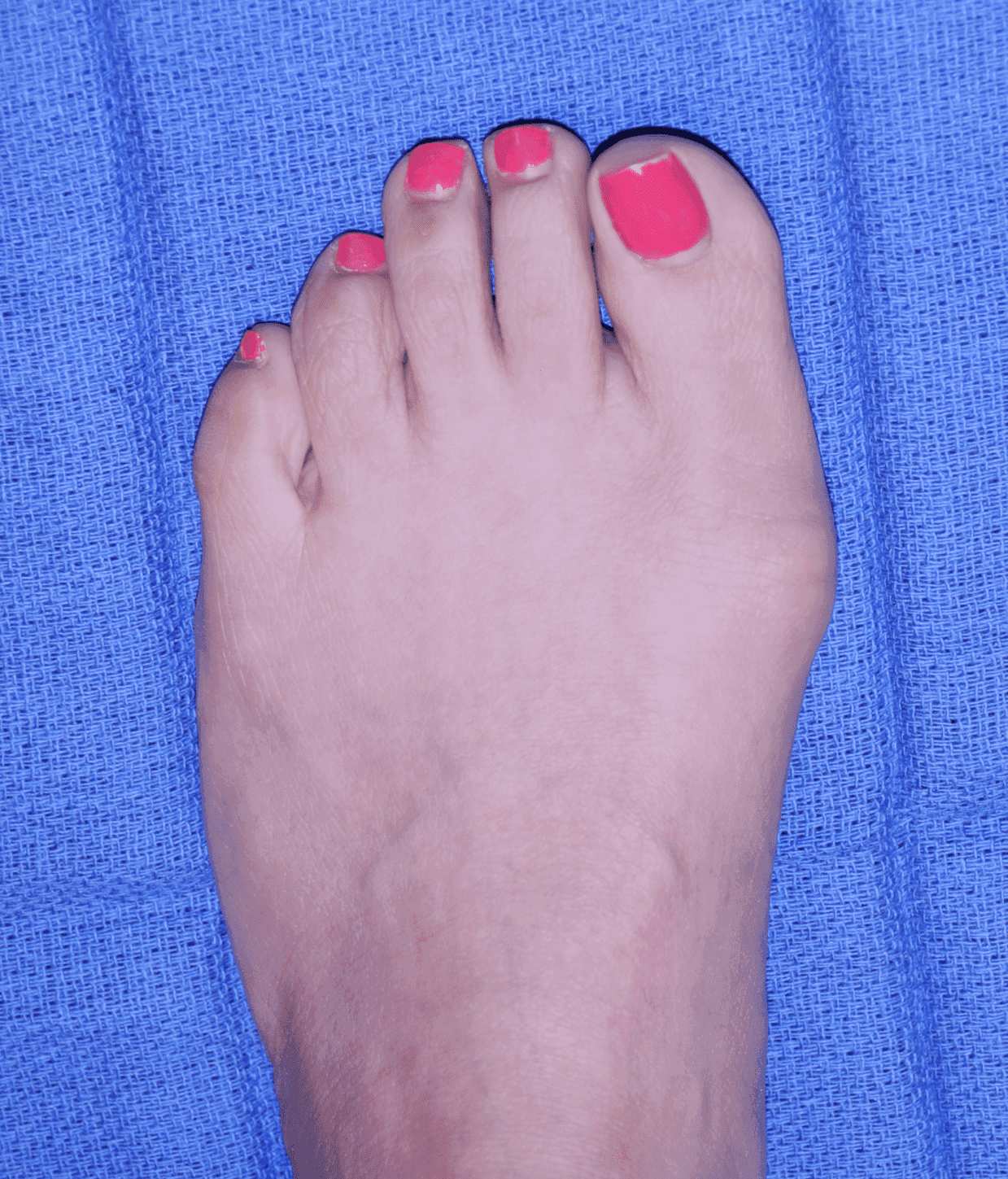 | 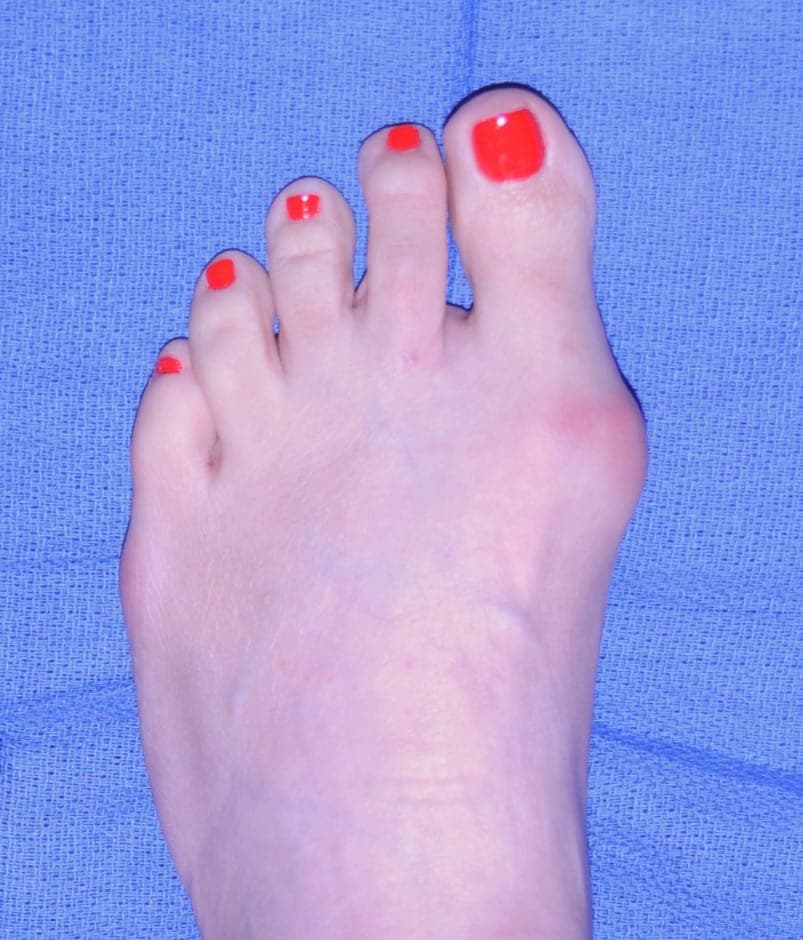 | 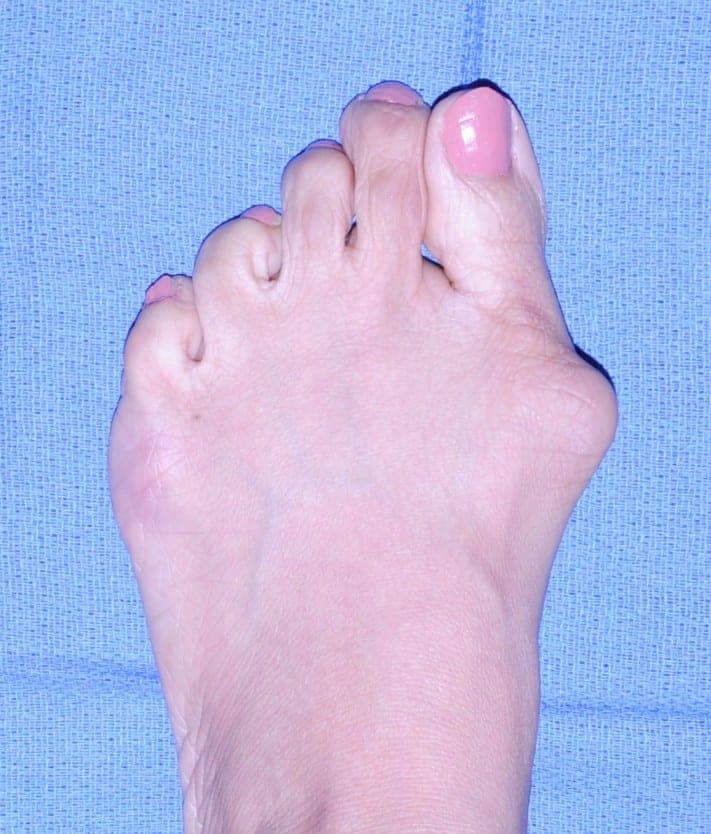 |  |
Why Do Bunions Develop?
Dr. Moy views most bunions as the expression of an inherited tendency toward instability, ligamentous laxity, abnormal foot structure, or imbalance within the first ray. Shoes can aggravate pressure and inflammation, but shoes alone usually do not explain why the joint has lost its alignment.
A patient may remember a parent or grandparent with a bunion even when other family members are unaffected. The inherited tendency can appear differently from one person to another and may progress at different rates. This lines up with the broader medical literature: the American Academy of Orthopaedic Surgeons notes that up to 70% of people who develop bunions have a family history of them, and research has linked hallux valgus to inherited traits affecting joint and connective-tissue structure.
Why Do Bunions Progress?
Once the great-toe joint begins losing its normal alignment, the deformity can become self-reinforcing. The first metatarsal changes position, the great toe drifts further, and the sesamoids become increasingly displaced relative to the metatarsal head. The capsule and ligaments adapt to the abnormal position, and the tendons crossing the joint may begin pulling along increasingly unfavorable lines of force.
Progression is not identical in every patient. Some bunions remain relatively stable for long periods. Others enlarge steadily, become painful, reduce joint motion, crowd the lesser toes, form calluses, or change the way pressure is distributed across the forefoot, sometimes causing problems beneath the second metatarsal.
For this reason, the size of the visible bump alone does not determine the significance of a bunion. Function matters as much as appearance.
How Dr. Moy Evaluates a Bunion
Two bunions that look similar on an X-ray can behave very differently. Dr. Moy's evaluation goes beyond measuring the angle between two bones and considers how the deformity behaves both at rest and under manual correction, including whether the deformity can be manually reduced, the mobility and stability of the first ray, the position of the sesamoids, the range of motion of the great-toe joint, and the presence of arthritis or cartilage damage. Weight-bearing X-rays are then interpreted together with the physical exam.
Dr. Moy uses a set of named clinical examinations, together called the Dynamic Preoperative Assessment of the First Ray, to formalize this evaluation. See Could You Be a Candidate? for how that assessment determines candidacy, and the full definitions of the individual tests.
Can Nonsurgical Treatment Correct a Bunion?
Nonsurgical care can reduce pressure and temporarily relieve discomfort. Wider shoes, padding, activity modification, anti-inflammatory measures, and selected orthotic devices may make the foot more comfortable. However, these measures cannot move the first metatarsal and sesamoids permanently back into normal anatomical alignment. They may control symptoms, but they do not straighten the structural deformity. Surgery is the definitive method of correcting the bunion itself.
If you have a bunion, switching to shoes with roomier deep toe boxes, low or flat heels, and adequate arch support can reduce pressure and pinching in the meantime.
Custom orthotics, such as bunion pads or insoles, can be worn inside the shoes to relieve the pressure on the big toe by distributing your weight better. A trained podiatrist like Dr. Moy can recommend the best orthotic for you.
Mole skin or felt patches can be worn over the bunion to prevent it from rubbing on the inside of your shoes. The pain can also be managed using over- the-counter pain relievers and anti-inflammatory medicines like ibuprofen or aspirin.
Dr. Moy can let you know which pain reliever is best suited for you. Ice packs can also be used to help reduce swelling. Ice should be kept in a cloth or towel and applied for 10 to 20 minutes at a time. Your foot should be elevated during application.
When Should Bunion Surgery Be Considered?
An X-ray alone should not determine whether someone needs bunion surgery. Some patients have large deformities and surprisingly little discomfort. Others have smaller deformities that significantly interfere with walking, exercise, work, or footwear. Surgery may be considered when the bunion causes meaningful symptoms or functional limitations and nonsurgical measures no longer provide acceptable relief. The goal of surgery is not a prettier X-ray, but a comfortable, functional, mechanically balanced foot.
See the Moy Approach for how Dr. Moy's procedure is planned around the entire joint rather than the visible bump, and Could You Be a Candidate? to see how eligibility is determined.
Whenever reasonable, the objective is also to preserve the natural first metatarsophalangeal joint and its motion, which becomes particularly important when a bunion coexists with stiffness, cartilage damage, or hallux limitus/rigidus.
Learn More From Medical Literature
- AAOS: Bunions, patient education from the American Academy of Orthopaedic Surgeons on causes and treatment.
- StatPearls: Hallux Valgus, a peer-reviewed clinical reference on hallux valgus etiology and management.
Have questions about your own feet?
Request a consultation with Dr. Moy to discuss your options.
This website provides general educational information and reflects Dr. Moy's clinical experience and professional opinions. It is not a substitute for an individual medical examination, diagnosis, treatment plan, or emergency care.
Every patient's anatomy, health, bone quality, procedure, healing response, and recovery are different. Recovery milestones and outcomes described on this website are typical or reported experiences and are not guarantees.
Patients should follow their own written postoperative instructions and contact the office promptly with unusual symptoms. Sudden chest pain, difficulty breathing, fainting, or another emergency requires immediate emergency medical care.