
Heel Pain
Written by Richard R. Moy, DPM, FACFAS, Podiatric Foot & Ankle Surgeon, bunion surgery experience since 1992.
Last medically reviewed: August 10, 2026
Why Do I Have Heel Pain?
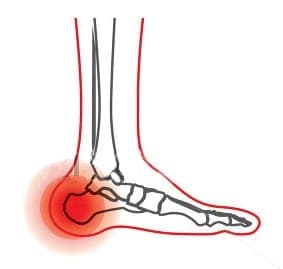
A highlighted image of heel pain.
Heel pain is diagnosed as plantar fasciitis. The majority of patients are treated successfully with conservative care.
The treatment consists of any one of a number of combinations: oral anti-inflammatory medication, orthotics, strapping, injections, modification in activity, modification in shoe gear, and some physical therapy. This conservative-first approach is well supported: the American Academy of Orthopaedic Surgeons notes that more than 90% of plantar fasciitis patients improve within 10 months of starting simple, nonsurgical treatment.
Dr. Moy has excellent success in a procedure known as endoscopic plantar fasciotomy. Patients are able to bear weight immediately with this procedure. The following morning when they step out of bed, they literally have no heel pain.
This procedure involves two very small incisions on the sides of the heel that require two stitches to close. Patients are able to resume normal activity in a very short amount of time.
When to See a Surgeon
Most heel pain improves with conservative care, so surgery is generally reserved for patients whose pain hasn't responded after a reasonable course of nonsurgical treatment. If your heel pain has persisted despite orthotics, stretching, and activity modification, an evaluation can determine whether the endoscopic procedure is appropriate for you.
Have questions about your own feet?
Request a consultation with Dr. Moy to discuss your options.
This website provides general educational information and reflects Dr. Moy's clinical experience and professional opinions. It is not a substitute for an individual medical examination, diagnosis, treatment plan, or emergency care.
Every patient's anatomy, health, bone quality, procedure, healing response, and recovery are different. Recovery milestones and outcomes described on this website are typical or reported experiences and are not guarantees.
Patients should follow their own written postoperative instructions and contact the office promptly with unusual symptoms. Sudden chest pain, difficulty breathing, fainting, or another emergency requires immediate emergency medical care.